New Braunfels sits in a humid subtropical climate with hot summers that expand roofing materials and mild winters that allow debris to linger. Homes in the Gruene Historic District often feature older wood decks and metal panels that react differently to sudden downpours than newer builds in Westpointe. When a leak appears near the Comal River or Landa Park, water can travel along rafters for days before showing inside, so quick exterior checks matter more than interior stains alone.
Many properties in Downtown New Braunfels and near Schlitterbahn sit on slight slopes where runoff from adjacent lots concentrates at roof valleys. Flash flooding after heavy summer storms can lift underlayment on older asphalt shingles common in these neighborhoods. The pros we connect you with focus first on locating the exact entry point rather than assuming the lowest spot is the source, because wind-driven rain often enters higher up along ridges facing prevailing southeast winds.
Comal County permitting rules require that any structural deck repair be documented, especially on homes built before 1980 that may have original skip-sheathing. Temporary measures must hold through the next rain event without creating new drip edges that channel water into attics. Local crews familiar with San Marcos and San Antonio suppliers know which sealants perform in the area’s high humidity without breaking down within weeks.
Technician insight
In New Braunfels, the thing that catches most people out with Emergency Roof Repair is how quickly water travels along the skip-sheathing in Gruene Historic District homes after a mild winter leaves pine needles packed in the valleys; one small tear near Landa Park can soak thirty feet of deck before anyone notices.
Leak After Summer Storm in Westpointe
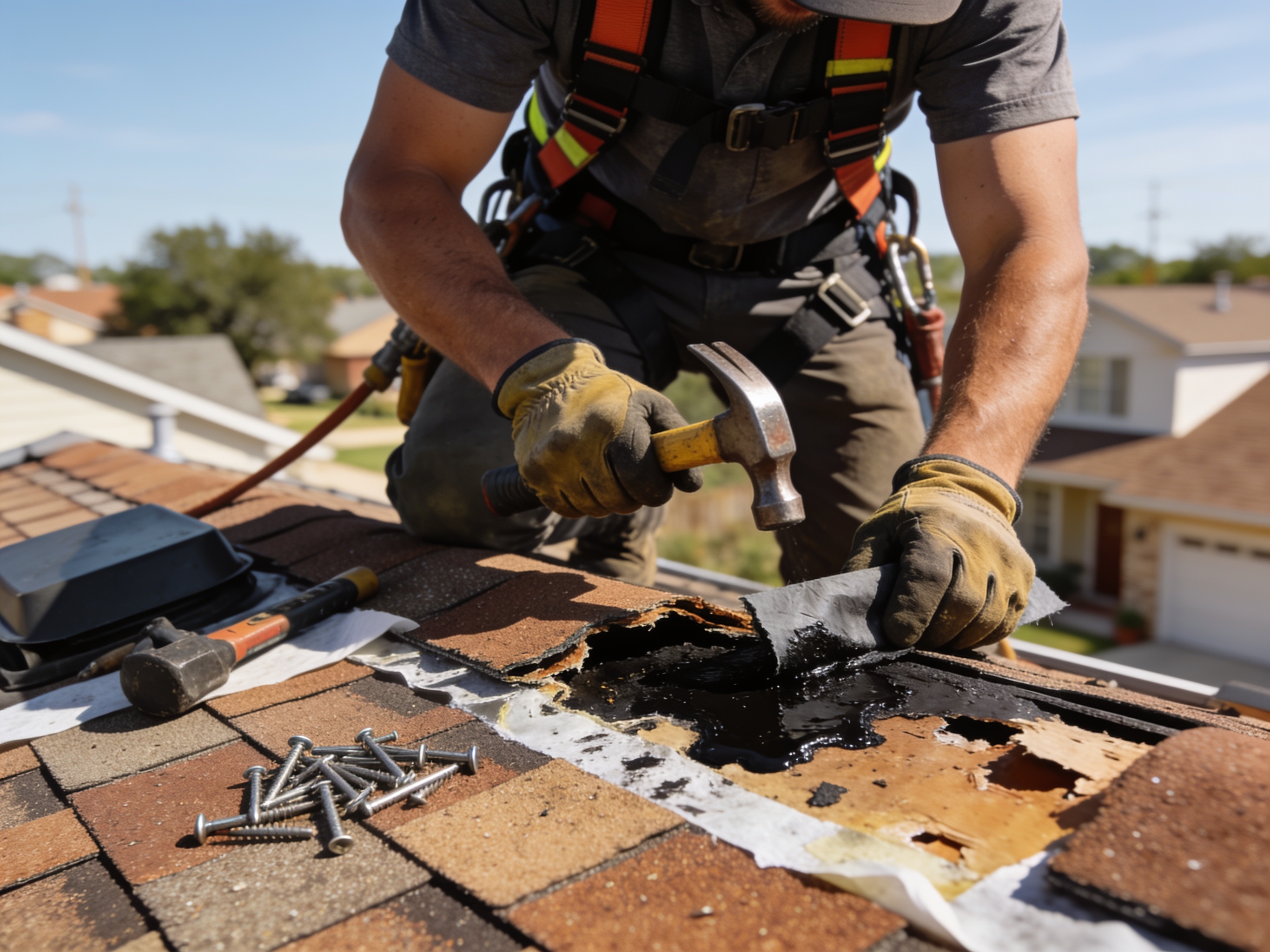
A homeowner in Westpointe noticed ceiling stains following a heavy July rain. The pros we connect you with found lifted flashing at a skylight on a 1990s roof. They installed a targeted temporary seal that survived the next storm system. Interior drying and permanent flashing replacement followed without further damage.
How it works
- 1
Site Assessment
The pros we connect you with inspect the roof from the exterior, checking valleys, penetrations, and deck condition in the specific neighborhood.
- 2
Temporary Stabilization
They apply targeted tarps or sealants to stop active water entry while protecting historic or newer roof surfaces alike.
- 3
Material and Repair Coordination
They match existing materials available from local suppliers and arrange permanent fixes that meet Comal County expectations.
- 4
Final Walkthrough
They verify the repair holds after the next rain and confirm no new leaks appear inside the home.
Pricing
Pricing varies with roof access, extent of deck damage, and material type; site visits determine the actual scope.